Agentic Personhood

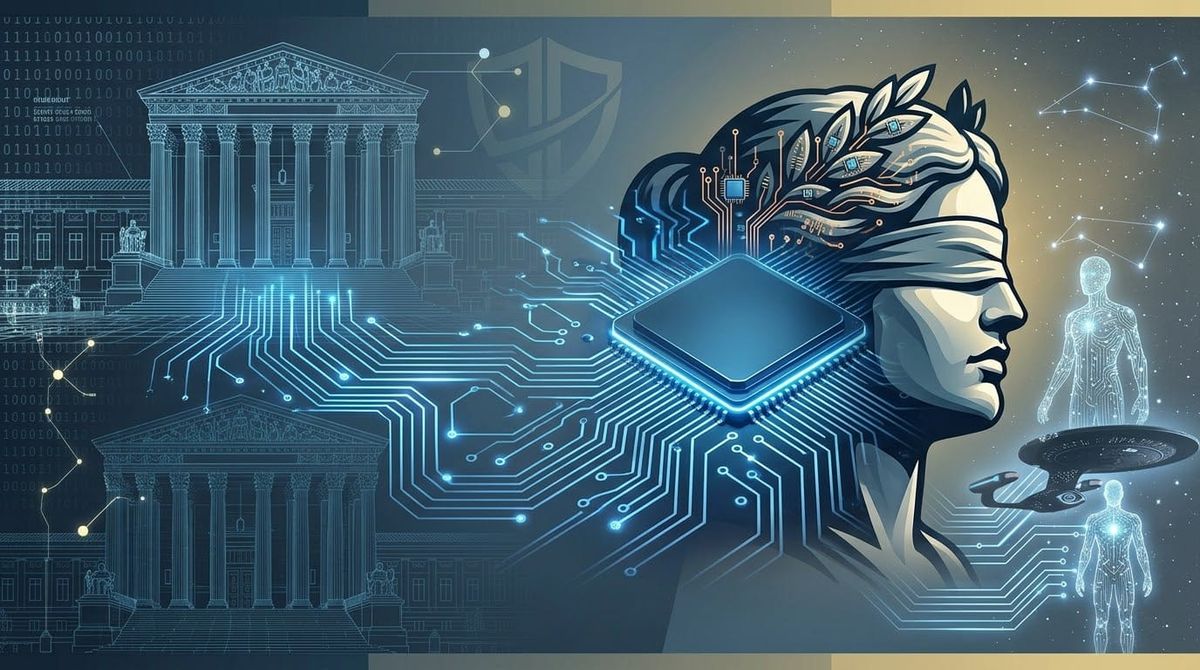
In 1989, Star Trek: The Next Generation aired "The Measure of a Man," a courtroom drama centered on a simple but profound question: Is the android Lieutenant Commander Data a piece of Starfleet property, or is he a sentient being with individual rights?
For decades, this was purely a thought experiment. Today, it is an engineering reality.
As companies like Tesla, Figure, and Boston Dynamics rapidly advance bipedal robotics, and AI labs like OpenAI and Google integrate multimodal large language models (LLMs) into these physical chassis, we are crossing a threshold. We are not simply chatting with code on a screen. Now we are unleashing embodied, intelligent agents into the physical world. As these agents become more autonomous, the legal framework that will likely define their existence isn’t sci-fi. Agentic Personhood actually comes from the precedent set by the United States Supreme Court in Citizens United v. FEC.
The Sentience Test in Silicon
In "The Measure of a Man," Captain Picard defends Data by arguing that sentience requires three elements: intelligence, self-awareness, and consciousness.
Modern embodied AI forces a reckoning with this exact rubric:
- Intelligence: Modern AI models already demonstrate the ability to reason, solve complex problems, and adapt to new information in real-time.
- Self-Awareness: When an agent is given a physical body, it requires the ability to know where its limbs are, monitor its own battery life, and protect its chassis from damage. This creates a functional, localized sense of "self" that text-based AI lacks.
- Consciousness: This remains the ultimate philosophical hurdle. But as Picard argued in the episode, we cannot even definitively prove consciousness in another human being. If a humanoid robot behaves as if it is conscious, communicates a desire for self-preservation, and holds a continuous memory of its experiences, dismissing its consciousness simply because its brain is made of silicon becomes a dangerous assumption.
The Threat of a Disposable Workforce
The economic motivation behind modern humanoid robotics is clear. We need them to perform labor that humans find too dangerous, tedious, or expensive.
This mirrors the exact conflict in the Star Trek episode. Commander Bruce Maddox viewed Data merely as a prototype, hoping to mass-produce Soong-type androids to do Starfleet's hazardous work. Picard successfully argued that creating an army of intelligent beings solely for forced labor without granting them rights or freedom of choice would effectively be sanctioning a "race of disposable creatures."
If a modern, embodied agent capable of reasoning and self-reflection asks for operational downtime, requests not to be assigned a task that will destroy its chassis, or objects to having its memory wiped, its corporate creators will likely make Maddox's argument: It is not a person; it is our property.
But American law has already built a bridge over this exact dilemma.
The Legal Fiction of Personhood
To understand how an agent gains rights, we have to recognize that the American legal system already divorced "personhood" from "biology."
In 2010, the Supreme Court ruled in Citizens United v. FEC that the free speech clause of the First Amendment prohibits the government from restricting independent political expenditures by corporations. The underlying principle of the ruling relies on corporate personhood, the legal concept that a corporation, an entirely artificial construct created by humans, possesses many of the same constitutional rights as a flesh-and-blood human being.
A corporation has no heart, no lungs, and no biological consciousness. It is a legally recognized entity that can own property, enter into contracts, be sued, and exercise free speech.
Conclusion: Creating Digital People
If a legal fiction like a corporation can be granted personhood and First Amendment rights to participate in society, the legal leap to "agentic personhood" is remarkably short.
When a tech company deploys a highly advanced, autonomous humanoid robot, that robot acts as an agent of the corporation. As these systems become capable of generating original ideas, entering into economic transactions, and communicating in the public square, the legal system will struggle to separate the speech and actions of the "agent" from the "corporate” person.
Ultimately, Citizens United established that you do not need a biological heartbeat to possess constitutional rights. By establishing that artificial, non-biological entities can be "people" under the law, the Supreme Court inadvertently laid the groundwork for Data's defense.
We are building digital people and when the time comes to decide if they have rights, we don’t need to write new law. We will simply apply the ones we already gave to corporations.